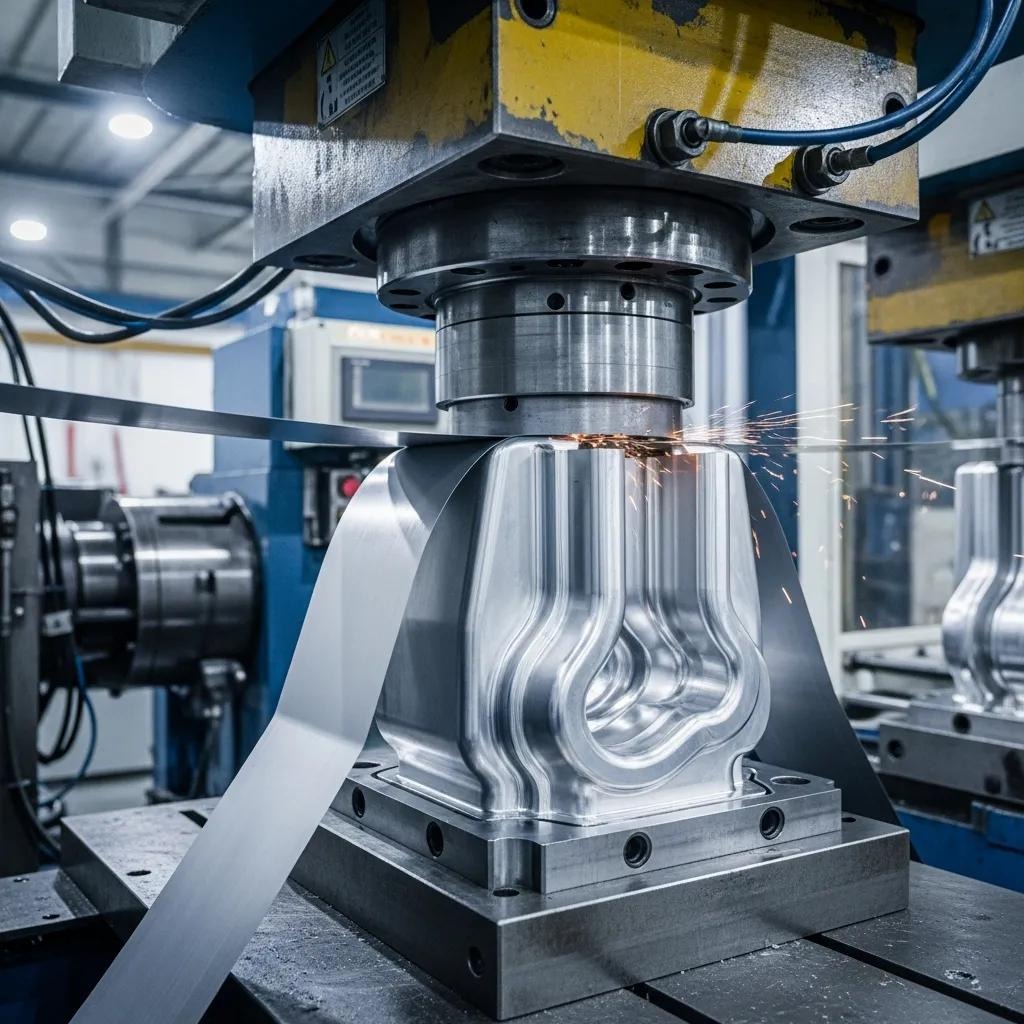
Deep draw stamping is a specialized metal forming process that allows manufacturers to create complex shapes from flat metal sheets. This technique is essential in various industries, including automotive, aerospace, and medical, where precision and quality are paramount. In this guide, we will explore the deep drawing process, its applications, and the design principles that optimize tooling for effective production. Many manufacturers face challenges in achieving the desired part geometry and quality, but understanding the deep draw stamping process can provide solutions. We will cover the key steps in the process, the industries that benefit from deep drawn parts, material selection, quality control, and common defects along with their prevention strategies.
What are the key steps in the deep draw stamping process?
The deep draw stamping process involves several critical steps that transform flat metal sheets into intricate shapes. Initially, a metal sheet is placed over a die cavity, and then it is drawn into the cavity by a punch. This process relies heavily on the material’s properties and the tooling design to ensure successful part formation. The importance of tooling design cannot be overstated, as it directly impacts the efficiency and quality of the final product.
To further enhance the efficiency and consistency of these repetitive processes, advanced control systems are being developed to learn from each cycle and adapt to subtle changes in material properties.
Optimal Control for Repetitive Deep Drawing Processes
Metal forming processes in general can be characterised as repetitive processes; this work will take advantage of this characteristic by developing an algorithm or control system which transfers process information from part to part, reducing the impact of repetitive uncertainties, e.g. a gradual changes in the material properties. The process is highly non-linear and the system plant is modelled using a non-linear finite element and the gain factors for the iterative learning controller is identified solving a non-linear optimal control problem. The optimal control problem is formulated as a non-linear least square problem where the system response is evaluated using a non-linear finite element model of the process.
Design strategy for optimal iterative learning control applied on a deep drawing process: recognising that stamping and deep-drawing operations are repetitive …, B Endelt, 2017
How does metal deep drawing form complex parts?
Metal deep drawing forms complex parts by utilizing a combination of tensile and compressive forces. As the punch descends, it stretches the metal sheet into the die cavity, allowing for the creation of shapes that would be difficult or impossible to achieve through other methods. For example, components like automotive fuel tanks, aerospace brackets, and medical device casings are often produced using this technique. The ability to create such intricate designs makes deep draw stamping a preferred choice in many manufacturing sectors.
What tooling design principles optimize deep draw stamping?
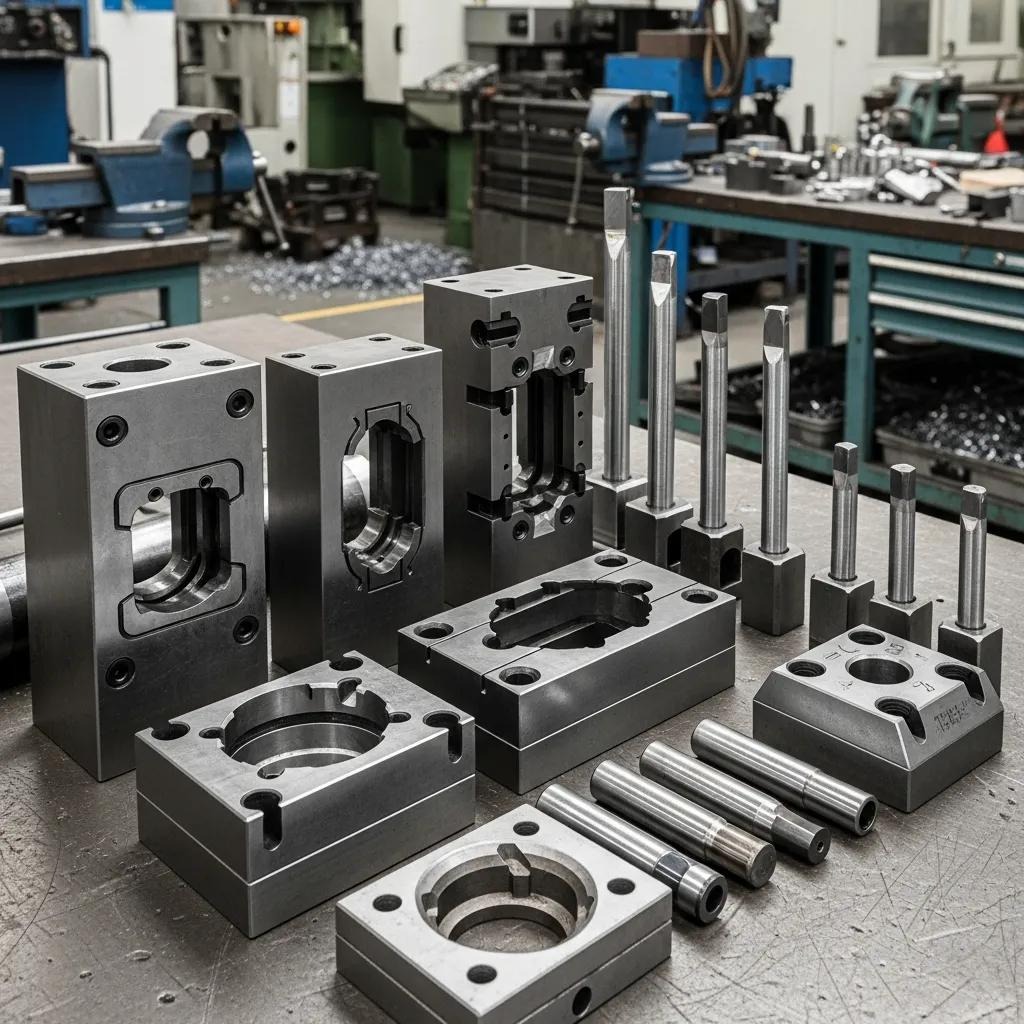
Effective tooling design is crucial for optimizing the deep draw stamping process. Key principles include ensuring proper die clearance, selecting appropriate materials for the tooling, and designing for ease of maintenance. Additionally, incorporating features such as guide pins and wear plates can enhance the longevity and performance of the tooling. By adhering to these design principles, manufacturers can improve production efficiency and reduce the likelihood of defects in the final products.
Which industries benefit most from deep drawn parts manufacturing?
Deep drawn parts manufacturing serves a wide range of industries, each with specific applications that leverage the advantages of this process. Industries such as automotive, aerospace, medical, electronics, military, and construction utilize deep drawn components for their unique requirements.
How is deep draw stamping applied in automotive and aerospace sectors?
In the automotive sector, deep draw stamping is used to produce parts like fuel tanks, chassis components, and body panels. These parts require high strength and precision, which deep draw stamping can provide. Similarly, in aerospace, components such as brackets and housings are manufactured using this technique to meet stringent safety and performance standards. The ability to create lightweight yet durable parts is a significant advantage in both industries.
What are the uses of deep drawn metal parts in medical and electronics fields?
In the medical field, deep drawn metal parts are often used in devices such as surgical instruments and housings for diagnostic equipment. These components must meet strict regulatory standards for quality and safety. In electronics, deep drawn parts are utilized for enclosures and connectors, where precision and reliability are critical. The versatility of deep drawn metal parts makes them invaluable across these sectors.
How do material selection and quality control impact deep drawing metal forming?
Material selection and quality control are vital aspects of the deep drawing process. The choice of material affects the formability, strength, and overall quality of the final product. Manufacturers must consider factors such as material thickness and mechanical properties to ensure successful deep drawing.
What materials are suitable for deep draw stamping and their thickness limits?
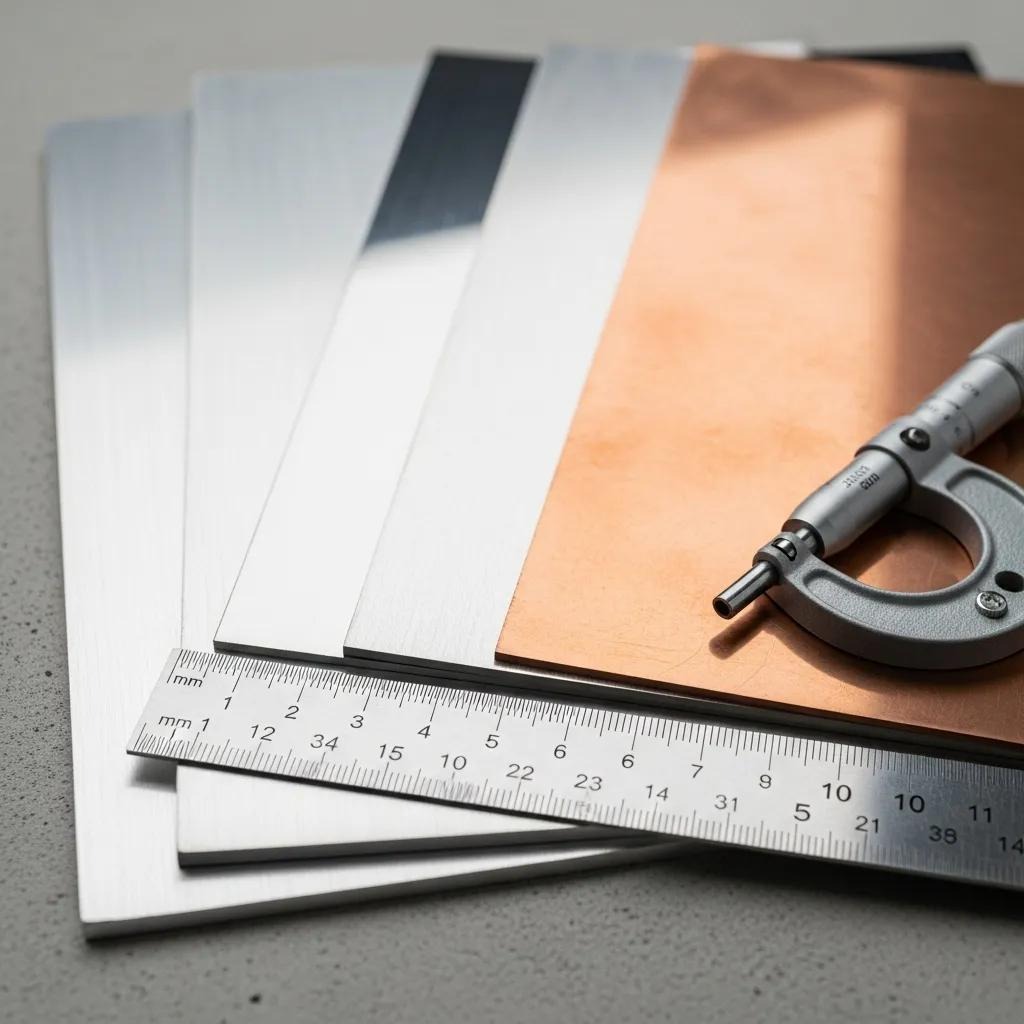
Common materials used in deep draw stamping include aluminum, stainless steel, copper, and various alloys. Each material has specific thickness limits that influence its formability. For instance, aluminum is often preferred for its lightweight properties, while stainless steel is chosen for its strength and corrosion resistance. Understanding these material characteristics is essential for achieving optimal results in the deep drawing process.
How do ISO quality certifications ensure manufacturing standards?
ISO quality certifications play a crucial role in ensuring that manufacturers adhere to established standards for quality and safety. These certifications require companies to implement rigorous quality control measures throughout the production process. By maintaining ISO certification, manufacturers can enhance their credibility and ensure that their deep drawn parts meet the necessary specifications for various applications.
What are common defects in deep draw stamping and how can they be prevented?
Despite its advantages, deep draw stamping can result in defects that compromise the quality of the final product. Identifying these defects and implementing prevention strategies is essential for maintaining production efficiency.
Which defect types occur during deep draw tooling and stamping?
Common defects in deep draw stamping include wrinkling, tearing, and incorrect dimensions. Wrinkling often occurs when the material is not adequately supported during the drawing process, while tearing can result from excessive material strain. Understanding the causes of these defects is crucial for implementing effective solutions.
Further research highlights practical applications of process optimization to significantly reduce common defects and scrap in deep drawing, particularly within the automotive industry.
Deep Drawing Optimization for Automotive: Reducing Defects & Scrap
ABSTRACT: AbstractDrawing die complexity is higher than conventional stamping operations, nowadays. It needs to decrease stamping die operation numbers for a part to reduce project budget consumption. Therefore, frequency of tearing, thinning, crack occurrence increase while this amendment. Force, blank cutting, blank location on the drawing die and process optimization were investigated to decrease tearing, thinning and crack occurrence in Transit bodyside inner panels which have over 110 mm. deep drawing process. Formability was improved at the end of this study. Thus production scrap, stoppage time of stamping line were decreased over 90%. This study was conducted at Ford Otosan.
A new process optimization of deep drawing part for sheet metal forming in automotive industry, A Ayday, 2022
What best practices improve defect prevention in deep draw stamping?
To prevent defects in deep draw stamping, manufacturers should adopt best practices such as optimizing die design, controlling material properties, and conducting regular maintenance on tooling. Additionally, training operators on proper techniques can significantly reduce the likelihood of defects occurring during production. By focusing on these areas, manufacturers can enhance the quality of their deep drawn parts and improve overall efficiency.
Different materials suitable for deep draw stamping exhibit distinct properties that influence their performance in the manufacturing process.
| Material | Thickness Limit | Formability | Common Applications |
|---|---|---|---|
| Aluminum | Up to 3 mm | High | Automotive parts |
| Stainless Steel | Up to 1.5-2 mm | Moderate | Medical devices |
| Copper | Up to 1.5 mm | High | Electronics enclosures |
This comparison highlights the importance of selecting the right material for specific applications in deep draw stamping, ensuring optimal performance and quality in the final products.