
Custom metal fabrication delivers tailored metal parts and assemblies that solve real manufacturing challenges across industries. Services like precision stamping and machining produce the repeatable, high-quality components manufacturers depend on. As product requirements tighten and production demands rise, the need for accurate, efficient fabrication grows. This article breaks down how custom metal fabrication works, the common processes and materials used, the industries that benefit most, why ISO quality certification matters, and how to request an industrial fabrication quote.
What Are Custom Metal Fabrication Services and How Do They Work?
Custom metal fabrication means designing and producing metal parts to specific drawings or requirements. Fabricators use forming, cutting, joining, and finishing techniques to shape raw metal into components that meet precise dimensions and tolerances. The main advantage is flexibility: custom fabrication fills gaps that standard, off-the-shelf parts cannot, giving manufacturers parts optimized for fit, function, and cost.
Which Processes Are Included in Custom Metal Fabrication?
Key processes commonly used in custom metal fabrication include:
- Metal Stamping: Using dies and presses to cut or form metal sheets into repeatable shapes—ideal for reliable, high-volume production runs.
- Machining: Removing material with lathes, mills, or CNC equipment to achieve tight tolerances and complex geometries.
- Welding: Joining parts with techniques selected for strength and service conditions to produce durable assemblies.
These techniques, used alone or together, enable production of components that meet strict industry requirements.
Although metal stamping supports large production volumes, maintaining uniform quality and minimizing process variation remain ongoing challenges for many manufacturers.
Sheet Metal Stamping: Identifying & Reducing Process Variation
Manufacturers that rely on traditional process-control charts often see out-of-control signals showing a shift in the process mean. In many sheet metal stamping operations, the process inputs lack the fine adjustability needed to correct the mean quickly when that happens.
Identifying sources of variation in sheet metal stamping, 2003
What Materials Are Commonly Used in Metal Fabrication?
Fabrication shops work with a range of metals selected for strength, weight, corrosion resistance, and cost. Common choices include:
- Steel: Durable and cost-effective, steel is a go-to for structural parts and heavy-duty applications.
- Aluminum: Lightweight and corrosion-resistant, aluminum is preferred where weight savings and thermal performance matter—like aerospace and automotive parts.
- Stainless Steel: Offers superior corrosion resistance and cleanliness, making it suitable for medical, food processing, and corrosive environments.
Knowing the material properties helps you match performance needs to the right fabrication approach.
Which Industries Benefit Most from Precision Metal Fabrication Companies Near You?
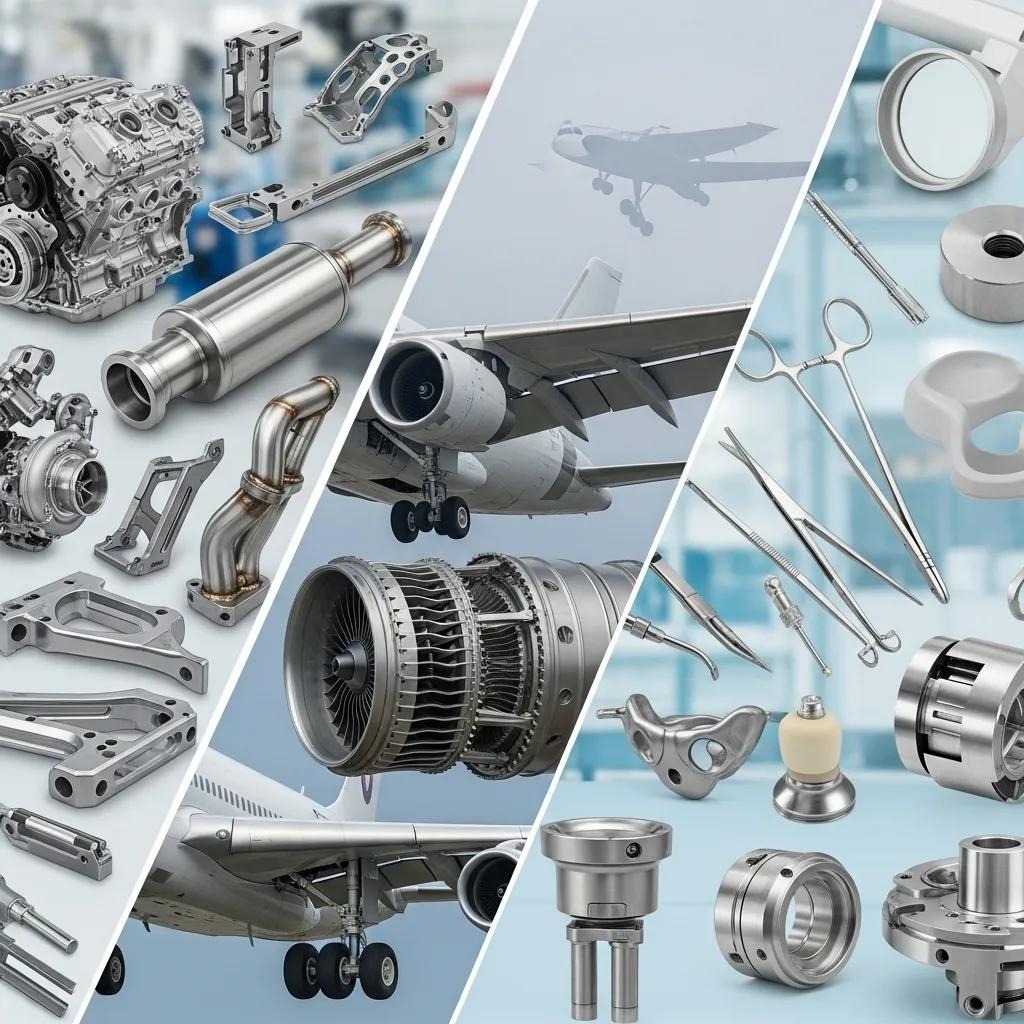
Precision metal fabrication supports a wide range of sectors by delivering parts that meet strict performance and reliability standards.
How Does Metal Fabrication Support Automotive and Aerospace Sectors?
Automotive and aerospace manufacturers depend on fabrication for components that require exacting tolerances and lightweight construction. Custom metal parts are used in engine systems, chassis, frames, brackets, and structural assemblies—areas where dimensional accuracy, repeatability, and material selection directly affect safety and efficiency.
What Are the Roles of Metal Fabrication in Medical and Electronics Industries?
Medical device and electronics makers rely on precision fabrication for critical parts like surgical instruments, implant components, housings, and connectors. Tight tolerances, biocompatible or anti-corrosive materials, and consistent production quality are essential to ensure device performance and regulatory compliance.
Why Is ISO Quality Certification Important for Metal Stamping and Machining Services?
ISO quality certification verifies that a manufacturer follows internationally recognized quality-management practices. Holding ISO certification signals consistent processes, documented controls, and a commitment to continuous improvement—factors that reduce risk and build confidence in part quality.
How Does ISO Certification Ensure Consistent Quality Standards?
ISO certification requires a formal assessment of a company’s quality-management system, including process controls, traceability, and corrective actions. Certification helps ensure suppliers deliver products that meet agreed specifications reliably, which is especially important in regulated and safety-critical industries.
What Quality Control Measures Are Used in Precision Metal Fabrication?
Typical quality controls include:
- Regular Inspections: In-process and final inspections catch defects early and keep production within tolerance.
- Testing Procedures: Mechanical tests—such as tensile, hardness, and dimensional checks—confirm material and part performance.
- Documentation: Detailed records of production steps, inspections, and test results provide traceability and support continuous improvement.
These practices help deliver parts that meet specifications and customer expectations every time.
How Can You Request a Quote for Industrial Metal Fabrication Near You?
Getting an accurate fabrication quote is easier when you provide clear, specific information up front.
What Information Is Needed to Get an Accurate Fabrication Quote?
Share these details to speed up quoting:
- Project Specifications: Drawings or CAD files, dimensions, tolerances, and finish requirements.
- Material Requirements: Type and grade of metal, surface treatments, or special certifications needed.
- Quantity: Prototype quantities and planned production volumes.
Supplying this information lets fabricators scope tooling, process steps, and pricing accurately.
How Do Lead Times and Pricing Affect Your Fabrication Project?
Lead times and cost depend on factors like material availability, complexity of tooling, production volume, and required finishing or testing. Early communication about schedules, budget constraints, and part lifecycle helps align expectations and avoid delays. Clear specifications and open dialogue with your fabricator keep projects on time and on budget.
For precision stamping and machining needs, CAR Stamping and Machining delivers engineered solutions for automotive, aerospace, medical, electronics, military, and construction industries. Contact our team to discuss your requirements and receive a tailored quote for your project.
Frequently Asked Questions
What are the advantages of custom metal fabrication over standard parts?
Custom metal fabrication offers several advantages compared to standard parts. It allows for the creation of components tailored to specific dimensions, tolerances, and performance requirements, which can enhance fit and function. This flexibility is particularly beneficial for unique applications where off-the-shelf solutions may not suffice. Additionally, custom fabrication can lead to cost savings by optimizing material usage and reducing waste, ultimately resulting in more efficient production processes.
How do I choose the right metal for my fabrication project?
Choosing the right metal for your fabrication project depends on several factors, including the intended application, environmental conditions, and performance requirements. Consider properties such as strength, weight, corrosion resistance, and thermal conductivity. For example, aluminum is ideal for lightweight applications, while stainless steel is preferred for environments requiring high corrosion resistance. Consulting with a fabrication expert can help you select the most suitable material for your specific needs.
What is the typical lead time for custom metal fabrication projects?
The lead time for custom metal fabrication projects can vary significantly based on factors such as project complexity, material availability, and production volume. Generally, lead times can range from a few days for simple prototypes to several weeks for larger production runs. To ensure timely delivery, it’s essential to communicate your project timeline and any specific deadlines with your fabricator early in the process.
Are there any specific certifications I should look for in a metal fabrication company?
When selecting a metal fabrication company, look for certifications that demonstrate their commitment to quality and industry standards. ISO 9001 certification is a key indicator of a company’s quality management system, ensuring consistent processes and product quality. Additionally, industry-specific certifications, such as AS9100 for aerospace or ISO 13485 for medical devices, can indicate compliance with stringent regulatory requirements, which is crucial for safety-critical applications.
What role does technology play in modern metal fabrication?
Technology plays a significant role in modern metal fabrication, enhancing precision, efficiency, and quality. Advanced techniques such as CNC machining, laser cutting, and 3D printing allow for complex geometries and tight tolerances that were previously difficult to achieve. Automation and robotics streamline production processes, reduce labor costs, and minimize human error. Embracing these technologies can lead to improved product consistency and faster turnaround times for fabrication projects.
How can I ensure quality control during the fabrication process?
To ensure quality control during the fabrication process, implement a robust quality management system that includes regular inspections, testing procedures, and documentation. In-process inspections can catch defects early, while final inspections verify that parts meet specifications. Establishing clear communication with your fabricator about quality expectations and utilizing standardized testing methods can further enhance the reliability of the final products.
What Post Production Assembly Services Do We Offer for OEMs?
Our post-production assembly services focus on precision and repeatability. We provide custom assembly lines and processes that match your product requirements, staffed by experienced technicians and supported by modern fixtures and testing tools. These services don’t just assemble parts — they shorten lead times, improve consistency, and make scaling production easier.
For OEMs, adopting custom assembly solutions is a strategic move: fewer errors, less waste, and lower operating cost all contribute to better productivity and a stronger market position.
How Do Custom Product Assembly Support Solutions Enhance Manufacturing Efficiency?
Custom assembly support aligns production steps directly with product specs, removing unnecessary operations and preventing common bottlenecks. That alignment lets you apply lean principles where they matter most, cutting cycle times and using materials and labor more efficiently.
Industry case studies show companies that implement tailored assembly systems typically boost output while lowering operational cost. The result is a more agile production footprint that responds quickly to shifting demand without sacrificing quality.
Which Industrial Shipping Solutions Ensure Safe and Timely Delivery?
Effective industrial shipping combines route planning, protective packaging, and reliable carriers to make sure goods arrive intact and on schedule. Tailoring logistics to the product and destination is essential to preserving product integrity and sustaining customer satisfaction.
Prioritizing safety in transit — from handling procedures to packaging design — minimizes damage and loss, protecting both your reputation and your bottom line.
What Flexible Shipping Options Are Available for Large Format and Complex Products?
Large or complex products need shipping plans built around their size, fragility, or environmental requirements. Solutions include custom crating, temperature-controlled transport, and dedicated freight services that match each product’s handling profile. These specialized approaches help maintain product condition across long or complex supply routes.
Flexible shipping also speeds delivery by removing handling obstacles and reducing rework, helping manufacturers meet tight deadlines and strengthen customer trust.
How Does Our Quality Assurance and ISO Certification Guarantee Post Production Excellence?
Quality assurance is the backbone of dependable post-production. By applying consistent inspection protocols and statistical controls, manufacturers can deliver products that meet strict specifications every time. ISO certification provides an independent standard showing customers you follow tested quality practices and continuous improvement.
Evidence from multiple industries shows disciplined Quality Management Systems (QMS) improve readiness for production and reduce surprises when scaling up.
Improving Production Readiness with Automotive QMS Best Practices
Key findings showed that the automotive production approval process followed industry best practices and addressed issues identified by the GAO. Non‑DOD industries used a prescriptive Quality Management System (QMS) that supported more disciplined development and verification of production capability before full production commitment.
Selection of an alternative production part approval process to improve weapon systems production readiness, 2017
Strong QA processes not only raise product reliability but also build long-term trust with customers — a vital advantage when competing for repeat business.
Why Is ISO Certification Critical for Post Production Assembly and Shipping?
ISO certification gives manufacturers a clear framework for consistent quality management across assembly and shipping. It signals to partners and clients that your processes meet international standards and that you’re committed to measurable improvement.
Beyond compliance, ISO practices reduce waste, tighten processes, and help teams identify and fix issues faster — all of which strengthen operational efficiency and customer confidence.
What Are the Benefits of Integrated Manufacturing Post Production Logistics?
Integrated post-production logistics bring assembly and shipping under a single, coordinated workflow. That integration improves scheduling, reduces handoffs, and increases supply-chain visibility, which lowers costs and speeds delivery.
Recent research highlights how optimizing post-production distribution and logistics can drive sales and build durable partnerships by improving responsiveness and reliability.
Optimizing Post-Production Distribution & Logistics Networks
This research examines approaches to optimizing a company’s post-production network to increase sales through long-term partnerships. The work focuses on: 1) building an integrated system for goods flow across the post-production network and 2) defining distribution policy elements and channel selection.
Optimisation of post-production channel management, 2024
Integrated logistics also improve cross-team communication, keeping stakeholders aligned and reducing the risk of delays or miscommunication throughout the production lifecycle.
How Does Seamless Assembly and Shipping Reduce Client Overhead?
When assembly and shipping operate as a single, coordinated process, clients see fewer redundant steps and better resource use. That coordination cuts handling, storage, and administrative costs.
For example, synchronizing final assembly with outbound logistics reduces on-site inventory needs and increases inventory turnover — delivering cost savings and faster fulfillment.
Different logistics approaches yield distinct operational benefits based on how they’re implemented.
| Logistics Solution | Mechanism | Benefit |
|---|---|---|
| Integrated Logistics | End-to-end coordination | Lower overhead and faster delivery |
| Custom Assembly Solutions | Product-specific workflows | Higher efficiency and consistency |
| ISO Certification | Formal quality controls | Greater client trust |
Together, integrated logistics and rigorous quality practices drive operational excellence — delivering products on time, in spec, and with the confidence customers expect.
Frequently Asked Questions
What types of industries benefit most from post-production assembly services?
Industries that demand tight tolerances and repeatable quality—automotive, electronics, consumer goods, and aerospace—get the most value from post-production assembly. Tailored assembly lets these sectors meet strict standards, shorten lead times, and scale production without sacrificing quality.
How can manufacturers ensure compliance with ISO standards during post-production?
Conformance starts with a documented Quality Management System (QMS), regular internal audits, and ongoing training. Keep clear records, review processes frequently, and use external auditors or consultants when needed to validate practices. Continuous improvement cycles ensure policies stay aligned with ISO requirements.
What role does technology play in enhancing post-production assembly processes?
Technology automates routine tasks, improves measurement accuracy, and provides real-time visibility. Robotics, IoT sensors, and data analytics streamline workflows and reduce defects. Production planning and inventory software also help synchronize assembly and shipping for smoother operations.
How do integrated logistics impact customer satisfaction in manufacturing?
Integrated logistics improve on-time delivery and reduce order errors, which directly boosts customer satisfaction. Clear communication across teams means fewer surprises for customers and faster resolution if issues arise, strengthening long-term relationships.
What challenges do manufacturers face in post-production assembly and shipping?
Common challenges include complex supply chains, quality control under scale, and unpredictable demand. Transportation delays, customs, and handling requirements add complexity. Overcoming these issues requires flexible strategies, technology investment, and strong logistics partnerships.
How can manufacturers measure the success of their post-production processes?
Track KPIs like cycle time, defect rates, on-time delivery, and inventory turnover. Combine those metrics with customer feedback to get a full picture of performance. Regular review of these indicators drives targeted improvements and sustained gains in post-production efficiency.